 how-to
Private Investigator Witness Interview Tips
Table of Contents
- Preparation and Case Familiarization Before the Interview
- Building Rapport with Witnesses
- Investigative Interview Question Templates and Techniques
- Active Listening and Non-Verbal Communication
- Best Practices for Interviewing Uncooperative Witnesses
- How to Document Witness Statements for Court
- Remote and Digital Evidence Integration in Witness Interviews
- Conclusion
- Frequently Asked Questions
Last Updated: September 3, 2026
Preparation and Case Familiarization Before the Interview
Before sitting down with a witness, you need to know your case inside out. Most interviews fail because investigators arrive unprepared, wasting time asking questions they should already know the answers to (peer-reviewed research). Your witness will notice immediately and trust erodes before the conversation starts.
Review all available case materials: police reports, incident timelines, prior witness statements, physical evidence logs, and digital records. Create a detailed chronology of events and identify gaps where witness testimony could fill critical details. Understand the witness's connection to the case, are they a direct observer, character witness, or secondhand source? This shapes how you frame questions. Review any prior statements carefully, noting inconsistencies and vague passages that need clarification.
Prepare a preliminary outline of topics to cover without scripting exact questions. Map the territory: what happened before, what they observed, what they heard, how they reacted, what they did afterward. Research the witness's background if possible, employment history, prior law enforcement involvement, credibility concerns. This isn't about prejudging them; it's about knowing what follow-up questions might be necessary.
Building Rapport with Witnesses
Rapport is the foundation of every productive witness interview. Without it, you're extracting information from someone who's withholding or defensive. With it, witnesses volunteer details they wouldn't otherwise mention.
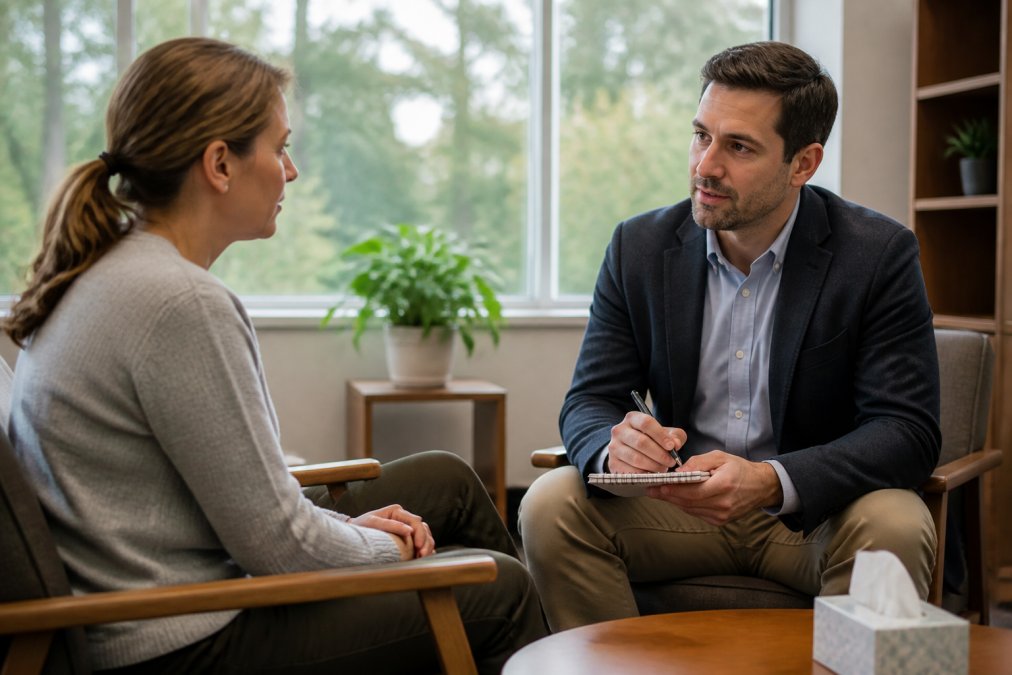
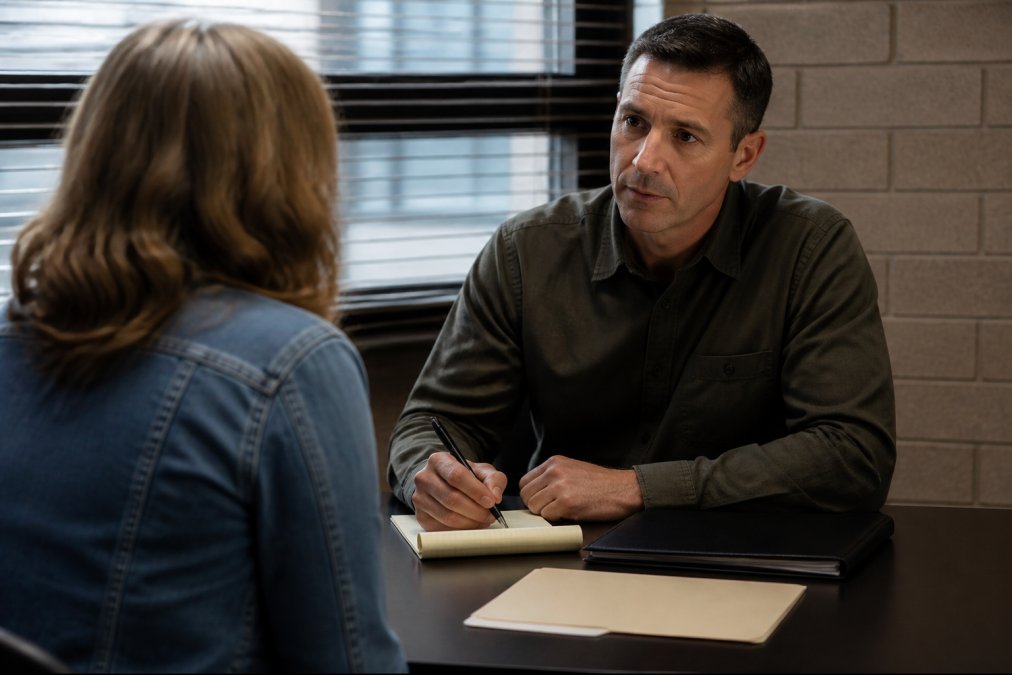
Meet in a quiet, private space where interruptions won't occur. Neutral ground removes power dynamics. Temperature, lighting, and seating matter, a warm, naturally lit space with comfortable seating makes witnesses feel safe enough to talk openly.
Begin with small talk before diving into the incident. Show genuine interest in them as a person. Explain your role clearly: are you working for the defense, prosecution, or a private party? Be direct about this. Transparency builds trust. Explain what you'll do with their statement and how it might be used.
Use open body language. Maintain eye contact without staring. Lean slightly forward to show engagement. Avoid crossing your arms. Establish confidentiality parameters early, explain what information will remain confidential and what might become part of a legal record. Witnesses often hold back because they fear their words will be shared or used against them.
Investigative Interview Question Templates and Techniques
The structure of your questions determines the quality of information you receive. Open-ended questions invite detailed narratives. Closed questions verify specific facts. Leading questions contaminate testimony and make statements inadmissible (justice.gov).
Start with broad, open-ended questions: "Tell me what you observed that day" or "Walk me through what happened from your perspective." These invite complete narratives without suggestion. Listen to that full account without interrupting. Your job in this phase is to gather their complete story, not to test it.
Move to focused, open-ended follow-ups: "You mentioned you heard shouting, describe what you heard." Use closed questions strategically to verify facts: "Was the car red or blue?" "What time did this happen?" Avoid leading questions that suggest an answer, these contaminate testimony and create grounds for defense objections.
Use cognitive interview techniques to help witnesses access memory (peer-reviewed research). Ask them to recall sensory details: "What did you smell? What sounds do you remember?" Ask about the setting: "What was the weather like? What time of day was it?" When a witness gives vague language, ask for specifics. If they say "it happened fast," ask "How many seconds, do you think?"
Active Listening and Non-Verbal Communication
What you do while the witness is talking matters as much as what you ask. Active listening signals that you're taking their account seriously.
Maintain consistent eye contact to show engagement and read non-verbal cues. Use minimal verbal acknowledgments: "I see," "Go on," "Tell me more." These keep the witness talking without inserting your bias. Note the witness's tone, pace, and hesitations, someone speaking quickly and confidently about direct observation sounds different from someone recounting secondhand information.
Watch for non-verbal cues indicating emotional states or stress. Sweating, trembling, difficulty making eye contact, or defensive posture don't necessarily mean someone is lying, but they signal that certain topics trigger emotional response. Pay attention to what the witness isn't saying. If you ask about a detail and they change the subject, that gap might be significant.
Document non-verbal observations in your notes: "Witness became visibly emotional when discussing the moment of impact" or "Witness maintained consistent eye contact throughout but hesitated before answering questions about the suspect's identity." Avoid interrupting or showing frustration, even if the witness is rambling. Stay neutral and patient.
Best Practices for Interviewing Uncooperative Witnesses
Some witnesses are hostile, evasive, or reluctant to talk. They might fear retaliation, distrust investigators, have legal exposure, or simply not want involvement. Your approach needs to shift when you encounter resistance.
Understand the source of resistance. Is the witness afraid? Angry? Protecting someone? Trying to avoid self-incrimination? The reason shapes your strategy. Acknowledge their reluctance directly: "I understand you might not want to talk about this. I appreciate you taking the time anyway." This validates their position without accepting it as final.
Establish common ground: "We both want to understand what actually happened." Use de-escalation tactics if the witness becomes hostile. Lower your voice, slow your speech, keep your posture open and non-threatening. Give them space. Avoid arguing or pushing back on statements. If a witness refuses to talk, respect that boundary and leave the door open for future contact.
For witnesses with legal exposure, consider the role of their attorney. If they have counsel, you may need to work through that attorney rather than directly. Document the witness's demeanor and cooperation level in your case file.
How to Document Witness Statements for Court
A witness statement is only as valuable as its documentation. A well-documented statement can become admissible evidence; a poorly documented one can be challenged or excluded.
Record the interview if possible and if the witness consents. Audio or video recording creates an objective record that protects both you and the witness. Always get explicit consent before recording and document that consent in your case file.
Take detailed contemporaneous notes during the interview. Write down what the witness says in their own words when possible, not your interpretation. Include direct quotes for important statements. Note the time, date, location, and who was present.
Create a formal written statement after the interview in a format your client's attorney prefers. Include all identifying information: full name, date of birth, contact information, occupation, relationship to the case, and any prior law enforcement involvement. Have the witness review the statement for accuracy before they leave, initial each page, and sign the final statement.
Preserve original notes and recordings as part of discovery. Note any areas of uncertainty: "Witness was uncertain about the exact time but believed it was between 2:00 and 2:30 p.m." is more credible than a precise time the witness wasn't certain about. Include context about the witness's ability to observe, distance, visibility, distractions, or whether they had a clear view and were paying close attention.
Remote and Digital Evidence Integration in Witness Interviews
Modern investigations often involve digital evidence: text messages, emails, social media posts, GPS data, video surveillance. Integrating this evidence into witness interviews strengthens testimony and helps witnesses recall details.
Before the interview, identify any digital evidence relating to the witness's account. Review surveillance video if the incident was captured. Have text messages or emails exchanged around the time of the incident available. This preparation allows you to ask informed follow-up questions.
Show relevant digital evidence to the witness during the interview if it helps clarify their account: "You mentioned you were near the intersection at 2:15 p.m., here's the timestamp on the surveillance video. Does this match what you remember?" Ask witnesses about their own digital footprint. Were they using their phone? Did they take photos or videos? Did they post about the incident on social media? Digital records they created often contain details they've forgotten.
Discuss any digital communications the witness had with others about the incident. Document digital evidence properly for court admissibility. Screenshots need metadata showing when they were captured. Video needs timestamps and chain-of-custody documentation. Work with your client's attorney to ensure digital evidence meets evidentiary standards.
Be cautious about showing digital evidence that might contaminate the witness's independent recollection. Get their account first, then use digital evidence to verify or clarify specific points. For remote interviews conducted via video conference, the same documentation rules apply. Record with consent, take detailed notes, and prepare a written statement afterward.
Conclusion
Effective witness interviewing combines thorough preparation, genuine rapport, skilled questioning, and meticulous documentation. The difference between a statement that moves a case forward and one that creates problems often comes down to whether the investigator invested time in these fundamentals.
When witness interviews are conducted professionally, they become the foundation of strong legal cases. Attorneys rely on detailed, well-documented witness accounts to build credible narratives and challenge opposing theories. At MCP Investigations & Security, we've spent over 20 years perfecting this process, from initial case preparation through expert witness testimony in depositions and trials. Our state-licensed investigators understand what courts require and how to gather evidence that actually holds up under scrutiny. If you need witness interviews conducted with the precision and confidentiality your case demands, contact MCP Investigations & Security for a consultation about your specific needs.
Frequently Asked Questions
Q: What are the most common mistakes investigators make during witness interviews?
A: Leading questions, poor listening skills, and failing to establish rapport are common mistakes. Investigators often ask suggestive questions that plant ideas in the witness's mind rather than letting them recall events naturally. Interrupting, checking your phone, or appearing skeptical damages credibility. Additionally, rushing through interviews or skipping proper case preparation can undermine the entire process. A professional investigative interview approach prioritizes active listening and neutral questioning.
Q: How should a private investigator document witness statements for admissibility in court?
A: Document statements through multiple methods: written contemporaneous notes, recorded interviews (with consent), and formal written statements signed by the witness. Include the date, time, location, and witness contact information. Capture exact quotes rather than paraphrasing. For critical details, have the witness initial or sign the document. Avoid editorializing or adding your own interpretations. Maintain a clear chain of custody for all documentation. These practices help ensure evidence stands up to legal scrutiny and supports an attorney's case.
Q: How do you handle uncooperative or hostile witnesses?
A: Start by acknowledging their concerns and explaining why their account matters to the investigation. Use de-escalation tactics: speak calmly, maintain neutral body language, and avoid defensive responses. Ask open-ended questions that give them control over the narrative. If they refuse to participate, document their refusal and the reason given. Never pressure, threaten, or use coercion, as this compromises evidence and professional credibility. Sometimes a follow-up contact after they've had time to think yields better results than pushing during the initial encounter.
Q: What is the difference between an investigative interview and an interrogation?
A: An investigative interview is open-ended, non-accusatory, and seeks factual information from a cooperative or neutral party. An interrogation is typically confrontational, used when deception is suspected, and aims to obtain a confession. Witness interviews should always be investigative in nature, neutral, fact-focused, and designed to gather their account without judgment. This approach builds credibility, encourages honest responses, and produces admissible statements. Crossing into interrogation tactics with witnesses damages rapport and can render statements inadmissible in court.
This article was written using GrandRanker