 ultimate-guide
Legal Evidence Collection for Attorneys: 2026 Guide
Table of Contents
- Types of Evidence Attorneys Must Collect
- How to Document Crime Scene Evidence Effectively
- Chain of Custody Procedures for Attorneys
- Digital Evidence Collection Tools and Forensic Imaging
- Admissibility of Evidence in Court: What Attorneys Need to Know
- Legal Evidence Collection Tools: Subpoenas, Discovery, and Litigation Holds
- Attorney-Client Privilege, Ethics, and the Attorney-as-Witness Risk
- How Private Investigators Support Legal Evidence Collection
Last Updated: August 24, 2026
Legal evidence collection for attorneys is the systematic process of identifying, preserving, and documenting evidence in a manner that satisfies evidentiary standards for admissibility in court. Done correctly, it forms the backbone of any successful case. Done carelessly, it hands opposing counsel a gift. This guide from MCP Investigations & Security covers every stage of the process, from identifying potential evidence to presenting it before a judge or jury, addressing digital forensics, remote collection, AI-assisted analysis, and the ethical traps that can turn an attorney into a witness in their own case.
Types of Evidence Attorneys Must Collect
Effective legal evidence collection begins with understanding what you are looking for. Evidence falls into several distinct categories, each carrying different collection requirements, authentication challenges, and admissibility considerations.
Physical, Documentary, and Testimonial Evidence
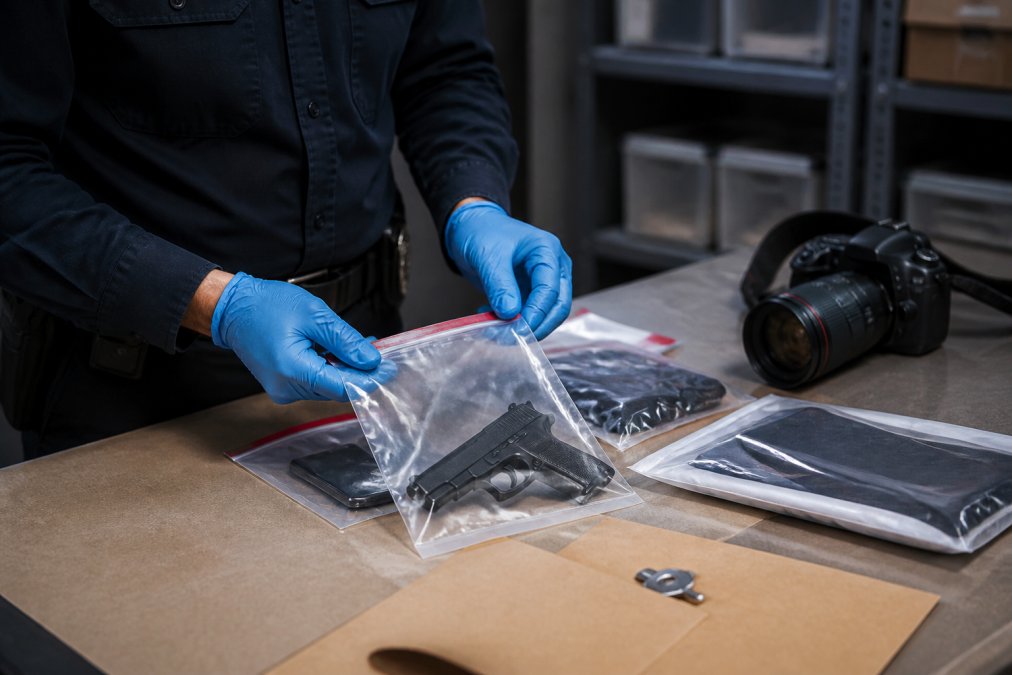
Physical evidence is any tangible object connected to the case: weapons, clothing, vehicles, or biological samples. It requires careful handling to avoid contamination and must be logged, photographed, and stored in controlled conditions.
Documentary evidence includes contracts, financial records, emails, text messages, and medical records. Authentication is the primary challenge. The Federal Rules of Evidence require that the proponent demonstrate the document is what it claims to be before admission.
Testimonial evidence comes from witnesses who provide sworn statements. The credibility of the witness and consistency of their account across interviews directly affects its weight at trial. Locating witnesses early matters because memories fade and people move.
Exculpatory vs. Inculpatory Evidence: Why Both Matter
A common mistake is focusing exclusively on inculpatory evidence that supports your theory. Exculpatory evidence, material that tends to negate guilt or reduce culpability, is equally important and legally required to be disclosed under Brady v. Maryland.
Ignoring exculpatory evidence creates two serious problems. First, it produces a one-sided evidentiary picture that opposing counsel will expose at trial. Second, failure to disclose it can result in case dismissal, sanctions, or bar complaints. Collect everything. Evaluate later.
How to Document Crime Scene Evidence Effectively
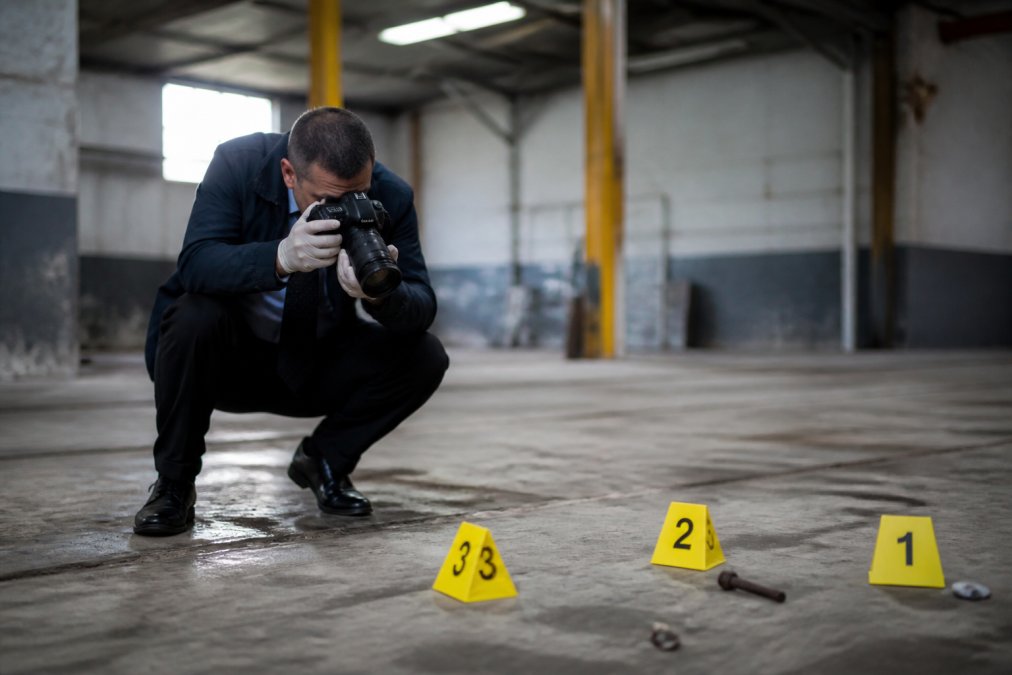
Documenting crime scene evidence effectively requires a structured, repeatable protocol applied consistently from the first moment you arrive at a scene.
Evidence Log and Incident Documentation Standards
Every piece of evidence must be recorded in a formal evidence log before it is moved, collected, or tested. The log should capture:
- Date and time of discovery
- Precise location using measurements, GPS coordinates, or both
- Condition of the item at time of discovery, including any damage or contamination
- Identity of the person who discovered and collected it
- Photographic record taken before the item is touched, using a scale marker for reference
- Method of collection and packaging used
- Transfer information including who received the item and when
Incident documentation extends beyond the evidence log. Witness statements, scene sketches, and video walkthroughs create a contemporaneous record far more credible than reconstructed accounts. According to the National Institute of Justice's guide on crime scene investigation, documentation should begin at the perimeter and work inward systematically to avoid disturbing potential evidence before it is recorded.
The biggest documentation failure is sequential: teams collect first and document second. That order is backwards. Once an item is moved, its original position is gone permanently.
Chain of Custody Procedures for Attorneys
Chain of custody is the unbroken, documented record of who possessed evidence, at what time, and under what conditions, from collection through trial presentation. A broken chain of custody creates a vulnerability opposing counsel will target.
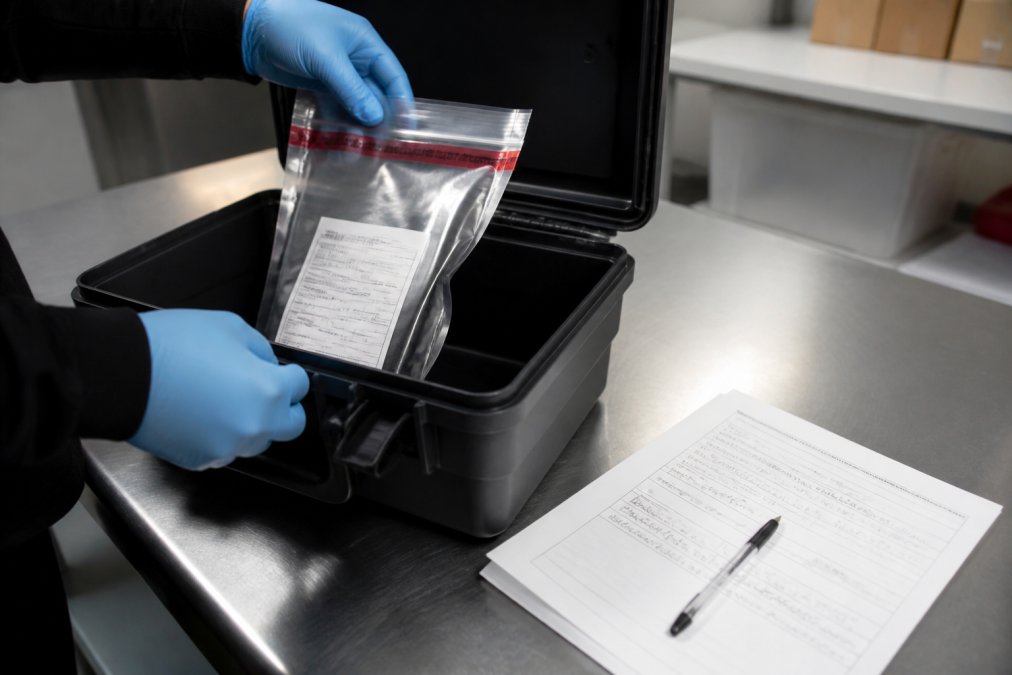
Every transfer of evidence must be documented with a signature, timestamp, and reason for transfer. Attorneys who receive evidence from investigators should log that receipt immediately and store the item in a controlled environment. Access should be restricted to named individuals, and any examination should be noted in the log.
| Stage | Required Documentation | Common Failure Point |
|---|---|---|
| Collection | Evidence log entry, photographs, collector ID | No timestamp recorded |
| Transfer to attorney | Signed receipt, packaging condition noted | Informal handoff, no paperwork |
| Storage | Access log, storage location, security conditions | Unrestricted access |
| Examination | Examiner ID, date, findings noted | Undocumented handling |
| Court presentation | Chain of custody affidavit, all prior records | Missing intermediate transfer |
Digital Evidence Collection Tools and Forensic Imaging
Digital evidence now appears in nearly every case, from criminal defense to wrongful death litigation. Emails, text messages, social media posts, GPS data, and surveillance footage all qualify as digital evidence, each carrying specific collection requirements.
Forensic imaging is the process of creating an exact, bit-for-bit copy of a digital storage device. The original device should never be examined directly. Instead, investigators work from a verified forensic image, preserving the integrity of the original and ensuring that metadata, including file creation dates and modification timestamps, remains intact.
Metadata is frequently decisive. A document timestamped before the event it allegedly describes, or a photograph whose geolocation data places the photographer elsewhere, can collapse or confirm a case theory. The Electronic Frontier Foundation's guide on digital privacy and evidence outlines how metadata embedded in common file formats can reveal information the file creator never intended to share.
Electronic discovery, governed by the Federal Rules of Civil Procedure, requires parties to identify, preserve, and produce electronically stored information responsive to discovery requests. Failure to comply can result in sanctions, adverse inference instructions, or default judgment.
AI-Assisted Evidence Analysis and Remote Collection
AI-assisted evidence analysis is changing how attorneys and investigators process large volumes of digital data. Document review platforms using machine learning can identify relevant records across millions of files in a fraction of the time required for manual review, flagging patterns and prioritizing documents for attorney review based on relevance scoring.
Remote evidence collection is increasingly practical for cases involving witnesses or digital assets located across multiple states. Screen capture tools, remote forensic acquisition software, and video-recorded witness interviews conducted via secure platforms can all produce admissible evidence when properly authenticated. The key requirement is documentation of the collection method so the opposing party can challenge the process if they choose to.
Remote collection is only as reliable as the authentication record attached to it. Every remotely collected item needs a clear provenance trail: who initiated the collection, what software was used, and how the integrity of the resulting file was verified.
Admissibility of Evidence in Court: What Attorneys Need to Know
Admissibility of evidence in court is determined by whether the evidence is relevant, authentic, not unfairly prejudicial, and not otherwise excluded by a specific rule. The Federal Rules of Evidence provide the governing framework in federal courts, and most state courts follow substantially similar standards.
Authentication, Metadata, and the Federal Rules of Evidence
Authentication under Federal Rule of Evidence 901 requires the proponent to produce evidence sufficient to support a finding that the item is what the proponent claims it is. For digital evidence, this typically means establishing the chain of custody, demonstrating that the forensic imaging process preserved the original data, and presenting metadata that confirms the file's origin and integrity.
The burden of proof for authentication is not high. The proponent does not need to rule out all possibilities of alteration. However, any weakness in authentication will be exploited during cross-examination of the expert witness presenting the evidence.
Expert witnesses play a critical role in digital evidence cases. A forensic examiner who can explain the imaging process, verify the metadata, and testify to the reliability of the collection method provides the authentication foundation that makes digital evidence stick. As documented in the Federal Rules of Evidence maintained by the Legal Information Institute, Rule 702 governs the admissibility of expert testimony and requires that the expert's methodology be reliable and applied correctly to the facts of the case.
Legal Evidence Collection Tools: Subpoenas, Discovery, and Litigation Holds
Attorneys have several formal legal tools available to compel the production of evidence that is not voluntarily disclosed.
A subpoena is a court-issued order requiring a person or organization to produce documents, records, or testimony. Subpoenas duces tecum specifically compel the production of documents and are routinely used to obtain phone records, financial records, and surveillance footage from third parties.
A litigation hold, sometimes called a preservation order, is a directive issued to a party or their counsel requiring them to preserve all potentially relevant evidence once litigation is reasonably anticipated. Failure to issue a timely litigation hold constitutes spoliation of evidence. Courts treat spoliation seriously: sanctions range from adverse inference instructions to case-dispositive rulings.
Motion to compel is the mechanism for enforcing discovery obligations when a party fails to produce responsive documents. The moving party must demonstrate that the requested materials are within the scope of discovery and that the opposing party has failed to comply without adequate justification.
Issue the litigation hold first, before any formal discovery requests, to lock in the preservation obligation. Follow with targeted document requests and subpoenas. Reserve the motion to compel for genuine non-compliance.
Attorney-Client Privilege, Ethics, and the Attorney-as-Witness Risk
Attorney-client privilege protects confidential communications between an attorney and their client made for the purpose of obtaining legal advice. This privilege intersects with evidence collection in ways that create real risk for attorneys who are not careful.
The most significant risk is the attorney-as-witness problem. If an attorney becomes personally involved in collecting, handling, or authenticating evidence, they may be called as a witness in the case. The ABA Model Rules of Professional Conduct Rule 3.7 generally prohibits a lawyer from acting as an advocate at a trial in which the lawyer is likely to be a necessary witness.
The practical solution is separation of roles. Attorneys should direct the evidence collection process but not personally handle, collect, or transport physical evidence when avoidable. Retain a licensed investigator to perform the hands-on collection work. That investigator becomes the witness, not the attorney.
Privilege also does not protect evidence itself. An attorney cannot instruct a client to destroy documents to prevent their production in discovery, and receiving physical evidence of a crime creates its own set of ethical obligations.
How Private Investigators Support Legal Evidence Collection
Private investigators provide legal evidence collection support that attorneys cannot efficiently or ethically perform themselves. Attorneys direct strategy and maintain privilege; investigators conduct field work, interviews, and documentation.
MCP Investigations & Security has supported criminal defense attorneys, wrongful death cases, and complex multi-witness litigation for over 20 years. As Southeast Missouri's first state-licensed detective agency and a member of the National Defenders Investigator Association, the firm brings formal credentials to work that directly affects trial outcomes. Capabilities include locating and interviewing witnesses, nationwide retrieval of certified conviction records, crime scene documentation, and expert witness testimony in depositions and trials.
The value of a qualified investigator is not just operational. An investigator who can testify credibly about their collection methodology, explain the chain of custody, and withstand cross-examination on their forensic procedures provides authentication support that strengthens the admissibility of everything they collected.
A practical checklist for attorneys engaging an investigator:
- Confirm the investigator holds a valid state license
- Establish written documentation protocols before fieldwork begins
- Define the chain of custody procedure for all collected items
- Specify authentication requirements for digital evidence
- Set a reporting schedule with defined deliverables and deadlines
- Clarify whether the investigator is available for deposition or trial testimony
- Confirm the investigator has nationwide capability if witnesses are out of state
The National Association of Legal Investigators' professional standards provides a useful benchmark for evaluating investigator qualifications and methodology.
Legal evidence collection is where cases are won or lost long before anyone sets foot in a courtroom. Gaps in documentation, broken chains of custody, and improperly authenticated digital evidence are avoidable failures, but only if the collection process is treated with the same rigor as trial preparation itself. MCP Investigations & Security provides criminal defense attorneys and legal teams with the investigative support they need: licensed investigators, expert witness testimony, nationwide record retrieval, and documented collection protocols that hold up to scrutiny. Contact MCP Investigations & Security to discuss your case requirements and get the evidentiary foundation your trial strategy depends on.
Frequently Asked Questions
What are the three major steps in evidence collection for legal proceedings?
The three core steps are identification, preservation, and documentation. Identification means recognizing what qualifies as relevant physical, digital, or testimonial evidence. Preservation involves implementing a litigation hold or preservation order to prevent spoliation of evidence. Documentation requires creating a detailed evidence log with chain of custody records, photographs, and written descriptions. Skipping or rushing any of these steps creates admissibility problems at trial and can expose attorneys to sanctions under the Federal Rules of Civil Procedure.
How do attorneys ensure the chain of custody remains intact?
Attorneys protect chain of custody by assigning a single custodian for each piece of evidence, using tamper-evident packaging, and recording every transfer with signatures, dates, and times. For digital evidence, forensic imaging creates a verified copy so the original file remains unaltered. Any gap in the chain of custody gives opposing counsel grounds to challenge admissibility. Working with a licensed private investigator who follows documented evidence-handling protocols adds an extra layer of verification that courts recognize.
What is the difference between physical and digital evidence collection?
Physical evidence collection focuses on tangible items: weapons, documents, clothing, and scene photographs. Digital evidence collection involves recovering data from devices, cloud accounts, and communication platforms using forensic imaging tools that preserve metadata. The key difference is fragility: digital evidence can be altered or deleted instantly, which is why litigation holds and preservation orders must be issued immediately. Both types must meet authentication standards under the Federal Rules of Evidence, but digital evidence requires additional verification of metadata to prove it has not been modified.
What role do private investigators play in the evidence collection process?
Licensed private investigators conduct witness interviews, photograph and document scenes, retrieve certified records, and perform electronic discovery support. They operate independently from the attorney, which protects against the attorney-as-witness conflict that arises when counsel personally gathers evidence. Investigators can also serve as expert witnesses in depositions and trials, explaining their methods and findings to the court. For complex cases involving multiple witnesses across different states, an investigative firm with nationwide capability handles record retrieval and interviews that would otherwise be logistically difficult for a single legal team.
Can evidence collected by a private investigator be used in court?
Yes, provided the investigator followed lawful collection methods and maintained a documented chain of custody. Evidence gathered through illegal surveillance, unauthorized access to accounts, or entrapment will be challenged and likely excluded. Courts evaluate admissibility based on how the evidence was obtained, how it was stored, and whether it can be authenticated. A licensed investigator who documents every step and testifies about their methods gives the evidence the best chance of surviving a motion to suppress or a challenge under the Federal Rules of Evidence.
What is spoliation of evidence and how can attorneys prevent it?
Spoliation occurs when relevant evidence is destroyed, altered, or lost after a party had a duty to preserve it. Courts can impose sanctions ranging from adverse inference instructions to case dismissal. Attorneys prevent spoliation by issuing a litigation hold notice immediately upon anticipating litigation, identifying all custodians who control relevant data, and sending preservation letters to opposing parties. For digital evidence, this means suspending automatic deletion policies on email servers and cloud storage. Acting within the first 24 to 48 hours after a triggering event dramatically reduces spoliation risk.
This article was written using GrandRanker