 comparison
Privin Alternatives for Legal Firms: 2026 Guide
Table of Contents
- What Legal Firms Should Know About Privin Alternatives
- Why Legal Firms Are Exploring Privin Alternatives
- How to Verify a Private Investigator License Before Hiring
- Hiring a Private Investigator for Criminal Defense: Key Selection Criteria
- Private Investigator Vetting Checklist for Legal Teams
- Comparing Service Models: State-Licensed Agencies vs. National Networks
- Making the Decision: ROI and Timeline Considerations
- Conclusion
Last Updated: August 30, 2026
What Legal Firms Should Know About Privin Alternatives
When you're evaluating investigative support for your legal practice, the market extends far beyond any single platform or service provider. Privin alternatives for legal firms span a spectrum from specialized state-licensed agencies to national networks, case management software, and hybrid service models. The choice depends on your specific case type, timeline, budget constraints, and whether you need boots-on-the-ground investigation or digital case organization.
This guide from MCP Investigations & Security breaks down how to assess privin alternatives, what to look for in a vetting partner, and how different service models compare when you're managing criminal defense, wrongful death, infidelity, or background investigation cases. We'll walk you through the practical decision framework legal teams actually use when they move beyond the standard vendor comparison.
The reality: most law firms don't evaluate privin alternatives systematically. They pick a service, hope it delivers, and scramble if timelines slip or evidence quality falls short. The firms that get consistent results treat investigator selection as a core intake decision, one that shapes case strategy from day one.
Why Legal Firms Are Exploring Privin Alternatives
Three pressures drive attorneys to look beyond any single investigative platform or service provider.
First, case complexity has grown. Criminal defense now routinely requires nationwide witness location, multi-state record retrieval, and expert testimony that combines investigation with courtroom credibility. A platform designed for case management alone doesn't solve the investigative gaps. You need actual investigators who can testify, not just software that organizes what you already have.
Second, timeline expectations have tightened. Clients expect discovery within 60 days (americanbar.org). That means investigative work starts immediately, runs parallel to legal strategy, and must produce admissible evidence on schedule. Services that operate on standard timelines, or that go silent for weeks, create bottlenecks. Legal teams now prioritize responsiveness and predictability over cost alone.
Third, regulatory scrutiny around evidence admissibility has intensified. Defense counsel can't afford to invest in investigation only to have a judge rule the evidence inadmissible because the investigator lacked proper credentials, failed to follow chain-of-custody protocols, or couldn't testify credibly in deposition. This is why state licensing, expert witness experience, and documented procedures matter more than ever.
These pressures explain why privin alternatives for legal firms now include specialized state-licensed agencies alongside national networks. Each model trades off coverage, cost, and credibility differently.
How to Verify a Private Investigator License Before Hiring
Before you hire any investigator, whether from a national platform, regional agency, or independent contractor, verify their actual state license. This single step prevents costly mistakes.
Every state requires private investigators to hold a current license issued by the state's regulatory body. In most states, that's the Secretary of State or a dedicated licensing board. Licenses are public record, searchable online, and typically include the investigator's name, license number, expiration date, and any disciplinary history.
Here's the process:
Step 1: Identify the correct state licensing authority. For investigations happening in your state, use your state's official licensing board website. For multi-state work, you'll need to verify licenses in each state where the investigator operates. The National Association of Certified Public Investigators (NACPI) and the National Defenders Investigator Association maintain state-by-state licensing resources.
Step 2: Search the licensing database directly. Don't rely on the investigator's word or their company website. Go to the state licensing board, enter the investigator's name or license number, and confirm the license is active. Note the expiration date, licenses expire and must be renewed. A lapsed license means the investigator cannot legally conduct investigations in that state.
Step 3: Check for disciplinary records. Most state licensing boards publish disciplinary actions, complaints, violations, suspensions, or revocations (ndia.org). These records reveal whether the investigator has had prior issues with evidence handling, client disputes, or professional conduct. A clean record doesn't guarantee quality, but disciplinary history is a red flag.
Step 4: Verify the license scope. Some states issue different classes of licenses (e.g., security guard vs. private investigator vs. licensed detective). Confirm the investigator holds the license class appropriate for your work. A security guard license doesn't authorize criminal investigation or witness interviews.
Step 5: Request proof of insurance. Licensed investigators carry professional liability insurance. Ask for a current certificate of insurance naming your firm as an additional insured. This protects you if the investigator's work causes harm or generates legal liability.
This verification takes 20 minutes and prevents hiring an unlicensed operator posing as a professional. It's non-negotiable before you sign an engagement letter.
Hiring a Private Investigator for Criminal Defense: Key Selection Criteria
Criminal defense investigations are fundamentally different from other investigative work. You're not just gathering facts, you're building a defense strategy, locating witnesses who may be reluctant to cooperate, and producing evidence that withstands cross-examination. The investigator you hire must understand courtroom standards, chain of custody, and expert witness testimony.
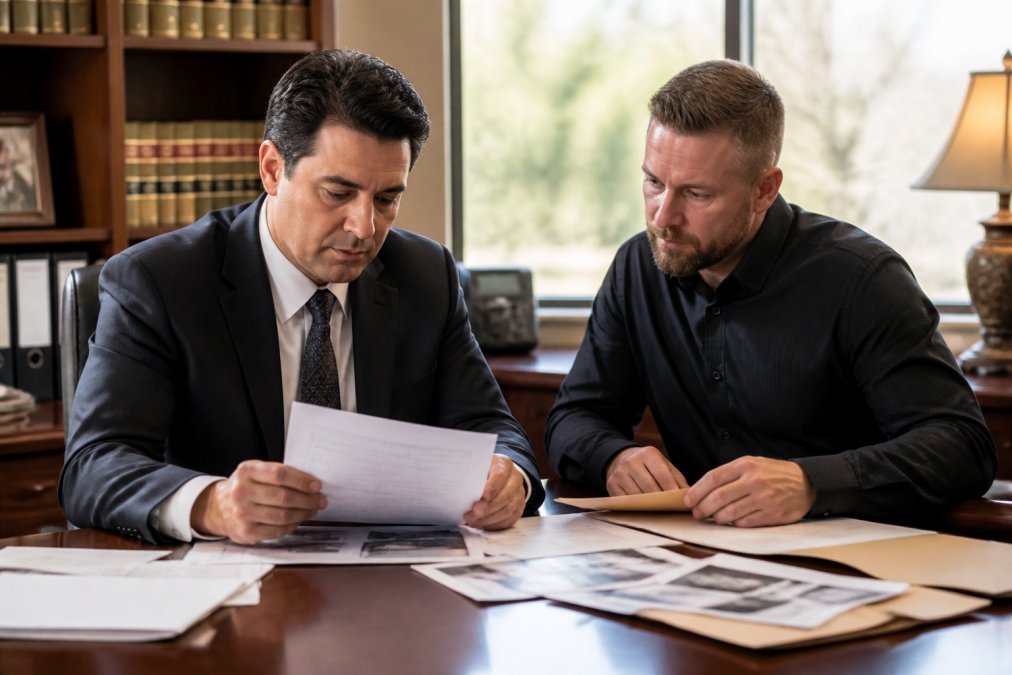
Expert witness experience is non-negotiable. Ask directly: Can this investigator testify in depositions and at trial? Have they been qualified as an expert witness? What's their track record with cross-examination? An investigator who can't defend their methodology in court is a liability. MCP Investigations & Security, for example, brings over 20 years of expert witness experience in criminal defense cases, investigators who've testified repeatedly and understand how prosecutors will challenge their findings.
Turnaround time and responsiveness matter more than you might think. Criminal defense operates on compressed timelines. Preliminary hearings, bail hearings, and trial dates don't move. Ask the investigator: What's your typical turnaround for witness interviews? How do you handle urgent requests? Do you provide status updates on a set schedule? Investigators who disappear for weeks or miss deadlines destroy case strategy. You need someone who communicates weekly, flags delays early, and prioritizes your timeline.
Nationwide capability is essential for many cases. If your defendant's alibi witness lives three states away, or if you need certified copies of prior convictions from multiple jurisdictions, your investigator needs nationwide reach. Some local or regional firms can't access out-of-state records efficiently. National networks and established agencies with multi-state connections solve this problem. MCP Investigations & Security, for instance, operates nationwide for record retrieval and witness location, not just in their home state.
Specificity in case type matters. An investigator experienced in drug cases may not understand the nuances of white-collar defense. An infidelity specialist won't have the procedural knowledge for criminal defense. Ask what percentage of their work falls into your specific practice area. Depth in your case type beats generalist experience.
Documentation and chain of custody protocols must be clear. Ask: How do you document evidence? What's your chain-of-custody procedure? Can you produce a written report suitable for court? Sloppy documentation kills admissibility. A professional investigator has documented processes, templates, and a track record of evidence that survives judicial scrutiny.
Cost structure should be transparent and aligned with your timeline. Some investigators charge hourly; others work on fixed fees for specific deliverables. Ask upfront: What does this investigation cost? Are there additional fees for travel, records retrieval, or court testimony? How do you bill for rush work? Surprises in invoicing late in a case create friction. Clear cost structures prevent that.
Private Investigator Vetting Checklist for Legal Teams
Use this checklist when evaluating privin alternatives for your specific case. Not every criterion applies to every engagement, but this framework ensures you're asking the right questions before you commit.

| Vetting Criterion | What to Check | Red Flag |
|---|---|---|
| State License | Current, active license in all relevant states | Lapsed, expired, or no license found |
| Disciplinary History | Clean record with state licensing board | Complaints, suspensions, or revocations |
| Professional Insurance | Certificate of insurance, firm named as additional insured | No insurance or unresponsive to request |
| Expert Witness Experience | Number of depositions/trials testified; cross-exam track record | Never testified or vague on experience |
| Turnaround Time | Typical timeline for interviews, reports, evidence delivery | Vague about timelines or slow response to inquiries |
| Nationwide Capability | Multi-state record access, witness location network | Limited to local/regional operations only |
| Case Type Specialization | Percentage of work in your practice area | Generalist or no relevant case experience |
| Documentation Standards | Written processes, chain-of-custody procedures, court-ready reports | Informal, undocumented, or unclear procedures |
| References | Contact info for 2-3 recent legal clients (not just general clients) | Refuses to provide attorney references |
| Cost Transparency | Itemized fee structure, no hidden charges | Vague pricing or surprise invoices |
| Communication Protocol | Weekly updates, escalation path for urgent issues | No defined communication schedule |
| Conflict Check | Confirmed they don't represent opposing party or co-defendants | Potential conflict of interest |
Work through this checklist before you sign an engagement letter. Any red flag warrants a follow-up conversation or a move to the next candidate.
Comparing Service Models: State-Licensed Agencies vs. National Networks
The investigative landscape includes two primary models, each with distinct trade-offs.
State-licensed detective agencies operate locally or regionally with deep roots in their jurisdiction. They know the court system, local law enforcement, and community resources. They're typically small teams with specialized case experience. MCP Investigations & Security exemplifies this model, Southeast Missouri's first state-licensed detective agency with over 20 years of local practice and nationwide capability for record retrieval and witness location. The advantage is credibility in local courts, personal relationships with judges and prosecutors, and investigators who understand regional procedural nuances. The drawback is limited geographic reach for cases requiring multi-state investigation without established partnerships.
National investigative networks operate across multiple states through affiliated investigators or centralized platforms. They offer broad geographic coverage and standardized processes. The advantage is consistency and reach, you can coordinate investigation across state lines through a single point of contact. The drawback is variable quality depending on the affiliate investigator, less personal accountability, and potential delays in communication or coordination.
For criminal defense work, the decision hinges on case geography and complexity. Local cases with straightforward investigation benefit from state-licensed agencies with deep court knowledge. Multi-state cases requiring coordinated investigation across jurisdictions may favor national networks, unless your state-licensed agency has established partnerships for out-of-state work.
Making the Decision: ROI and Timeline Considerations
Selecting a privin alternative isn't just about features or price. It's about whether the investigator's capabilities and timeline align with your case strategy and budget.
Start with timeline. Criminal defense cases operate on court schedules, not investigator schedules. Ask: When do you need evidence? When is your preliminary hearing? When does discovery close? Map these dates backward to determine how much investigative time you actually have. An investigator who needs 90 days to deliver witness interviews is worthless if your hearing is in 45 days. Conversely, paying for rush fees on a case with a six-month runway wastes budget.
Next, assess case complexity. Simple background checks or single-witness interviews don't require the same investigative depth as multi-defendant criminal cases with nationwide witness networks. Match the investigator's capability to actual case need. Overpaying for national reach on a local case is inefficient. Underpaying for a generalist on a complex case creates risk.
Then, calculate cost against outcome risk. If a botched investigation costs you a case, the savings on investigator fees becomes meaningless. High-stakes cases justify premium investigative support. Lower-stakes matters can work with more cost-efficient options. The question isn't "What's the cheapest investigator?" It's "What investigator gives me the best outcome for this specific case?"
Finally, factor in communication and responsiveness. An investigator who costs 10% less but requires three days to respond to emails creates hidden costs, your time chasing status updates, case delays waiting for information, stress from uncertainty. Responsive investigators with clear communication protocols pay for themselves in efficiency.
Selecting a privin alternative requires moving beyond brand familiarity to systematic evaluation of licensing, expertise, timeline capability, and case-specific fit. The best investigator for your practice isn't necessarily the largest national network or the cheapest option, it's the one whose capabilities and responsiveness match your case demands. MCP Investigations & Security brings state-licensed detective credentials, over 20 years of criminal defense experience, expert witness testimony capability, and nationwide record retrieval, a combination that addresses the most common gaps legal teams encounter. Start your vetting process with the checklist above, verify licenses directly with state boards, and prioritize investigators who communicate clearly about timelines and costs. The investigator you choose shapes your case outcome from the first interview forward.
Frequently Asked Questions
What criteria should law firms use to vet private investigators?
Law firms should verify state licensure, confirm experience in their specific practice area (criminal defense, wrongful death, etc.), review expert witness credentials if testimony is needed, and confirm nationwide record retrieval capabilities. Request references from other attorneys, check National Defenders Investigator Association membership, and ensure the firm can deliver evidence that meets admissibility standards for trial. Ask about their process for maintaining chain of custody and how quickly they can turn around witness interviews and scene documentation.
How do licensed detective agencies support criminal defense outcomes?
State-licensed detective agencies provide comprehensive discovery and evidence collection through witness interviews, crime scene documentation, certified record retrieval, and expert witness testimony in depositions and trials. Their legal expertise ensures evidence is gathered in ways that meet court standards, reducing the risk of inadmissible findings. Licensed agencies can locate witnesses across multiple states, retrieve criminal conviction records with proper certification, and provide credible expert testimony that strengthens defense strategy and client outcomes.
What are the advantages of hiring a state-licensed firm over national aggregators?
State-licensed detective agencies offer direct accountability, consistent quality control, and investigator continuity throughout your case. They maintain professional liability insurance and comply with state regulations, reducing legal risk. Licensed firms often provide expert witness testimony with courtroom experience, whereas aggregators may connect you with varying-quality contractors. Direct relationships ensure faster communication, priority scheduling, and investigators who understand local court systems and admissibility standards specific to your jurisdiction.
How quickly can investigators complete witness interviews and scene documentation?
Timeline depends on case complexity, witness location, and geographic scope. Criminal defense cases requiring nationwide witness interviews typically require 30-60 days for comprehensive discovery. Scene documentation can often be completed within days of assignment. When selecting an investigator, confirm their capacity to meet your attorney's deadline before engagement. Experienced firms can prioritize urgent matters and provide interim reports while full discovery continues, keeping your defense preparation on schedule.
This article was written using GrandRanker