 how-to
How to Verify Investigator Credentials for Court
Table of Contents
- Why Verifying Investigator Credentials Matters Before Trial
- Step 1: Confirm the Investigator Holds a Current State License
- Step 2: Review the Investigator's Professional History and Certifications
- Step 3: Questions to Ask a Private Investigator Before Hiring
- Step 4: Verify Official Identification and Credentials in Person
- Understanding the Admissibility of Private Investigator Evidence in Court
- What to Do If You Suspect Fraudulent Activity or Unlicensed Practice
- Conclusion: Confirm Credentials Before You Rely on the Evidence
- Frequently Asked Questions
Last Updated: September 5, 2026
Why Verifying Investigator Credentials Matters Before Trial
Verifying investigator credentials for court is the process of confirming that the individual gathering evidence, interviewing witnesses, or documenting a scene holds the legal authority to do so and can withstand cross-examination. Without proper standing, opposing counsel can attack the evidence's admissibility, and the court may exclude it entirely.
At MCP Investigations & Security, we have spent over 20 years operating as Southeast Missouri's first state-licensed detective agency, and we have seen how credential verification separates reliable testimony from wasted expense. This guide walks through the exact steps to verify investigator credentials before trial.
Step 1: Confirm the Investigator Holds a Current State License
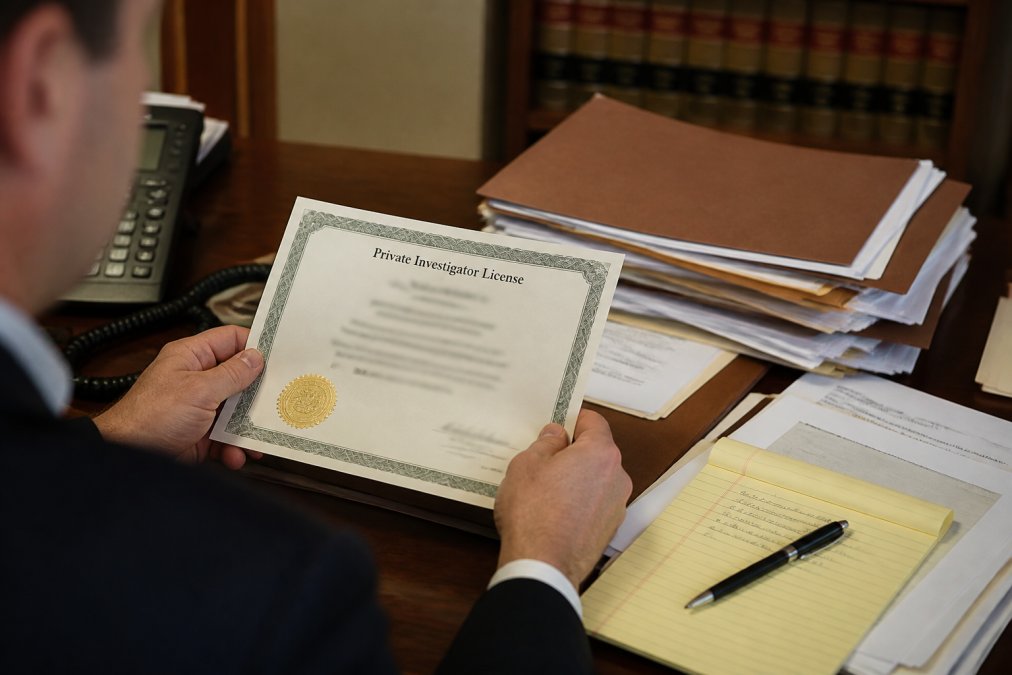
Verifying investigator credentials for court begins with one non-negotiable check: confirming the investigator holds an active, current license in the state where the investigation occurred. Private investigators are regulated at the state level, not federally, so a license from one state does not grant authority in another (ncsl.org).
To confirm a license, you need the investigator's full legal name and, in most states, their license number. Many states provide online databases where you can search by name or number to confirm the license is active and in good standing.
Private Investigator License Lookup by State
A private investigator license lookup by state typically requires visiting the state's licensing division website, often housed under the department of public safety, state police, or a dedicated regulatory board. Most states offer free online verification portals to confirm status.
Since requirements vary by jurisdiction, consult the specific state agency governing investigative services in the state where the work was performed. A state may require continuing education, a surety bond, or professional liability insurance to maintain an active license.
Contacting the State Licensing Division Directly
When online records are unclear or incomplete, contact the state licensing division directly by phone. The licensing division can confirm whether the license is active, whether any disciplinary actions or complaints are on file, and whether the investigator has ever faced suspension or revocation.
Step 2: Review the Investigator's Professional History and Certifications
A state license proves legal authority, but professional history reveals competence. Review the investigator's background in civil litigation, criminal defense, or the specific type of investigation you need, and ask how long they have held their license and whether they have testified as an expert witness.
Professional certification and association memberships, such as the National Defenders Investigator Association, add another layer of assurance. While membership is not a substitute for a state license, it demonstrates a commitment to professional conduct and continuing education.
A common mistake is assuming that years in adjacent fields, such as law enforcement, automatically qualify someone to conduct private investigations. Confirm that their services are covered by a current private investigator license, not just a retired law enforcement credential.
Step 3: Questions to Ask a Private Investigator Before Hiring
Asking the right questions before hiring can reveal whether an investigator has the resources and experience to deliver admissible evidence before your trial date.
| Question to Ask | Why It Matters | Red Flag to Watch For |
|---|---|---|
| What is your current license number and state of issuance? | Confirms legal authority to operate | Vague answers or refusal to provide the number |
| Have you testified as an expert witness in depositions or trials? | Determines if they can present evidence effectively | No trial experience for a case headed to court |
| Can you locate and interview witnesses across multiple states? | Confirms nationwide capability for complex cases | Claims of local-only coverage when witnesses are elsewhere |
| How quickly can you deliver witness interviews and scene documentation? | Ensures deadlines are met before trial | Unrealistic timelines or no clear process |
| Can you obtain certified copies of convictions and public records? | Verifies evidence will be admissible | No established process for certified record retrieval |
A credible investigator will answer these questions directly and may offer references from attorneys they have worked with previously.
Step 4: Verify Official Identification and Credentials in Person
Before an investigator begins work, or at your first in-person meeting, ask to see their official identification card and investigator badge. A legitimate state-licensed investigator will carry a photo ID issued by the state licensing division, often alongside a badge. The card should include their name, license number, and an expiration date, matching the license you verified through the state database.
Visual Checklist for a Legitimate State-Issued ID Badge
Most state-issued investigator credentials share common security features that are difficult to replicate. Use this checklist when examining an ID card in person:
- Holographic overlay or ghost image: Most state licensing divisions embed a hologram or a secondary faded photo of the holder. Tilt the card under light; the hologram should shift or change color.
- Micro-printed text: Look for a line of text that appears solid but reads as individual letters under magnification. This is a standard anti-counterfeit feature on state credentials.
- Raised or embossed license number: Many states print the license number with a tactile, raised surface. Run your fingernail lightly across the number to feel the texture.
- State seal or department logo: The card should carry the official seal of the issuing agency, such as the state's department of public safety or division of licensing. Compare it to the seal on the agency's website.
- Expiration date format: State-issued cards typically display expiration dates in a standard format (MM/DD/YYYY). An unusual format or a missing date is a red flag.
- Photo quality and background: Legitimate cards use a professional, high-resolution photo with a plain background. Blurry, pixelated, or cut-out photos suggest a homemade or altered card.
Court-Appointed vs. Private Investigator Credentials
The distinction between a court-appointed investigator and a private investigator is critical, yet frequently misunderstood. A court-appointed investigator, such as a guardian ad litem, a special master, or an investigator appointed under Federal Rule of Civil Procedure 53, derives their authority from a court order, not a state license. Their credentials will include:
- A signed court order or appointment letter naming the individual and defining their scope of authority
- A case number and the presiding judge's signature
- Often, a separate oath or affirmation filed with the court clerk
If an investigator claims court-appointed status, request a copy of the court order and verify it with the court clerk's office directly.
A private investigator hired by an attorney or a party operates under a different framework. Their authority comes from the state licensing division, and their credentials are the state-issued license and ID card. Some also hold court-appointed status for specific cases, verify each credential independently.
What a Federal Credential Looks Like
If the investigator claims federal authority, the credential will differ substantially. Federal special agents carry credentials issued by their employing agency, such as the FBI, ATF, or U.S. Marshals Service. These credentials include:
- The agency's official seal and the agent's name and photo
- A serial number and an expiration date
- A statement of the agent's authority under the relevant section of the United States Code
Federal credentials do not have a state license number and are not searchable in state databases. To verify them, contact the agency's public affairs office or field office directly. Federal agents typically do not conduct private investigations for civil litigation, if someone claims to be a federal agent while offering private investigative services, that is a serious red flag.
Documenting the Verification
After examining the credentials in person, document the verification. Record the investigator's full name, license number, state of issuance, expiration date, and the date you verified the information against the state database. This creates a paper trail for reference if the credentials are later challenged.
Understanding the Admissibility of Private Investigator Evidence in Court
The admissibility of private investigator evidence in court depends on whether the evidence was lawfully obtained and properly documented. Courts generally admit such evidence if it was collected without violating laws related to trespass, wiretapping, or invasion of privacy.
The Legal Framework: What Makes Evidence Admissible
Evidence gathered by a private investigator must clear the same admissibility hurdles as evidence gathered by law enforcement, with one significant difference: the exclusionary rule typically applies only to government actors. Private investigators are not bound by the Fourth Amendment's warrant requirement in the same way. However, they remain subject to:
- State criminal laws: Trespass, stalking, harassment, and illegal wiretapping statutes apply to private actors. Evidence obtained through these violations is often excluded under state evidentiary rules.
- Federal wiretap laws: The federal Wiretap Act (18 U.S.C. § 2511) prohibits the interception of oral and electronic communications without consent (justice.gov). A private investigator who records a phone call without one-party consent in a two-party consent state has committed a federal crime, and the recording will be inadmissible.
- State privacy torts: Intrusion upon seclusion, public disclosure of private facts, and false light claims can expose both the investigator and the attorney who hired them to civil liability.
The Legal Consequences of Unauthorized Investigation
When an investigator operates without a valid state license, the legal implications extend beyond the evidence itself. Most states criminalize unlicensed private investigation, classifying it as a misdemeanor for a first offense and a felony for subsequent offenses (ncsl.org).
The attorney who hired an unlicensed investigator faces separate risks. Courts have held that attorneys can be sanctioned for using unlicensed investigators, as it may violate state bar rules. In some jurisdictions, the attorney may be required to disclose the investigator's unlicensed status to the court and opposing counsel.
The "Fruit of the Poisonous Tree" Analogy in Civil Cases
While the exclusionary rule does not directly apply to private actors, courts in civil cases have adopted similar logic when evidence is obtained through illegal means. If an investigator trespasses or uses a pretext to gain access to a protected record, the opposing party can move to exclude that evidence.
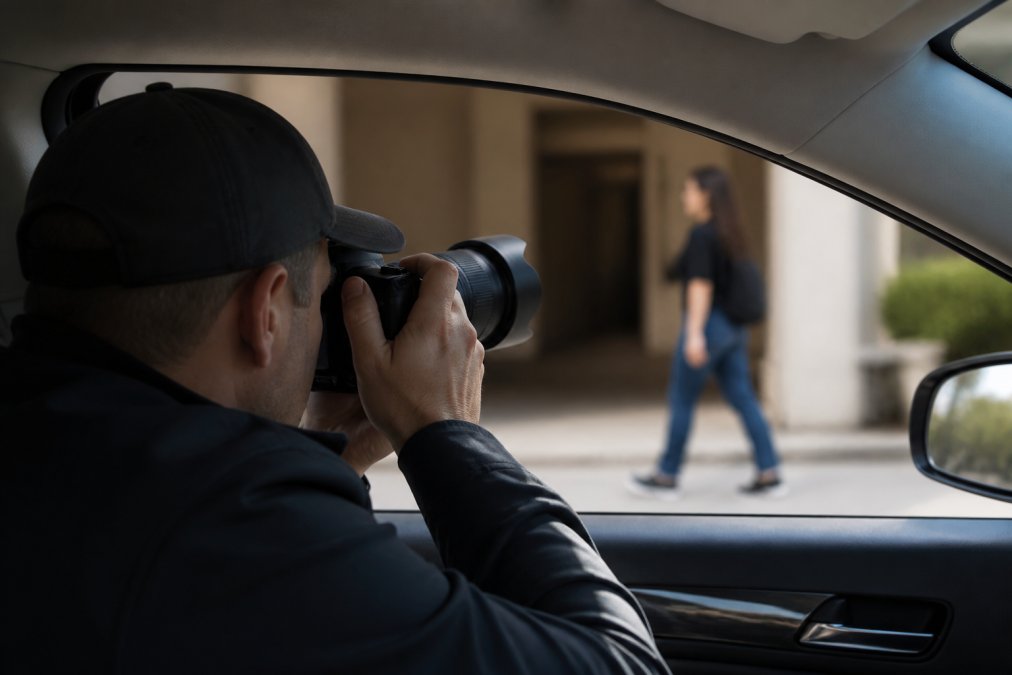
A qualified investigator documents findings with clear photographs, signed witness statements, and certified copies of public records. When testifying, they must explain their methodology, show they followed standard procedures, and demonstrate that their evidence has not been altered.
The Chain of Custody Requirement
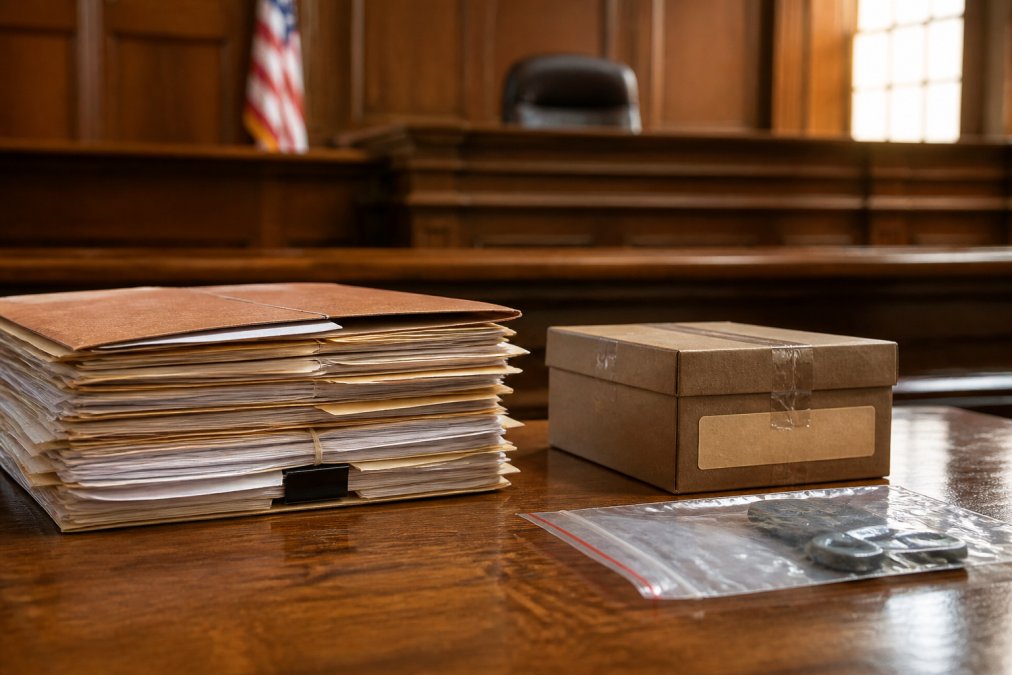
Evidence gathered by a private investigator must maintain a clear chain of custody to be admissible. The investigator must document:
- Who collected each piece of evidence and when
- Where the evidence was stored between collection and trial
- Who had access to the evidence during that period
- Any transfers of custody between the investigator, the attorney, and any experts
A licensed investigator with trial experience will have established protocols for chain of custody documentation. An unlicensed or inexperienced investigator may not, and gaps in the chain can render otherwise reliable evidence inadmissible.
The Practical Test: Can the Investigator Survive Cross-Examination?
The ultimate test of admissibility is whether the investigator can defend their work under cross-examination. Opposing counsel will probe licensing status, methodology, notes, and prior testimony. An investigator who cannot articulate their legal authority or who has a history of disciplinary actions will undermine the evidence they were hired to protect.
Before trial, conduct a mock cross-examination with the investigator. A seasoned investigator will welcome this preparation. One who resists or cannot provide clear answers is a liability.
What to Do If You Suspect Fraudulent Activity or Unlicensed Practice
If you discover that an investigator is operating without a valid license, or if you suspect fraudulent activity, stop using their services immediately and document everything.
Reporting suspicious activity to the state licensing division is the appropriate first step. The division has the authority to investigate complaints, revoke licenses, and refer cases for criminal prosecution. You should also notify your client and, if the matter involves a pending case, inform the court.
If you suspect someone is impersonating a licensed investigator, report the impersonation to the state police and the licensing division. A legitimate investigator will cooperate fully with verification efforts; an unlicensed or fraudulent one will often become defensive or disappear when pressed.
Conclusion: Confirm Credentials Before You Rely on the Evidence
Verifying investigator credentials for court is not a bureaucratic formality; it is a safeguard for the integrity of your evidence and your case. Each step protects you from the risk of inadmissible evidence and wasted expense.
When you need an investigator with verified credentials, documented trial experience, and the ability to handle complex, multi-state investigations, MCP Investigations & Security offers the assurance that comes from over 20 years of licensed practice. Our team provides comprehensive discovery and evidence collection, including nationwide record retrieval, witness interviews, and expert witness testimony in depositions and trials.
Get started with MCP Investigations & Security and confirm your evidence will hold up in court.
Frequently Asked Questions
How do I verify a private investigator's license status?
Search the licensing division of the state where the investigator operates. Most states offer an online lookup tool where you can search by name or license number to confirm the license is active and check for disciplinary actions. If online records are unclear, call the licensing division directly and ask for written confirmation of the investigator's status.
Can evidence from an unlicensed investigator be used in court?
It depends on state law. Some states prohibit unlicensed investigators from collecting evidence for compensation, which can make the evidence inadmissible. Even where it is not automatically barred, opposing counsel will attack the investigator's credibility. Verifying the license is the first step to protecting your case from a successful motion to suppress.
What questions should I ask a private investigator before hiring them for a court case?
Ask about their license number, years of experience, and history testifying in court. Request references from attorneys they have worked with. Inquire about their process for documenting evidence and preserving chain of custody. Confirm their insurance coverage and ask whether they have ever had a complaint filed against them with the state licensing board.
What is the difference between a federal agent and a private investigator when verifying credentials?
Federal agents work for a specific government agency and carry official credentials tied to that agency, such as a special agent badge. Private investigators are licensed by the state and typically do not have federal law enforcement authority. To verify a federal agent, contact the agency directly. For a private investigator, use the state's licensing division or regulatory board.
This article was written using GrandRanker
Frequently Asked Questions
Q: How do I verify a private investigator's license status?
A: Search the licensing division of the state where the investigator operates. Most states offer an online lookup tool where you can search by name or license number to confirm the license is active and check for disciplinary actions. If online records are unclear, call the licensing division directly and ask for written confirmation of the investigator's status.
Q: Can evidence from an unlicensed investigator be used in court?
A: It depends on state law. Some states prohibit unlicensed investigators from collecting evidence for compensation, which can make the evidence inadmissible. Even where it is not automatically barred, opposing counsel will attack the investigator's credibility. Verifying the license is the first step to protecting your case from a successful motion to suppress.
Q: What questions should I ask a private investigator before hiring them for a court case?
A: Ask about their license number, years of experience, and history testifying in court. Request references from attorneys they have worked with. Inquire about their process for documenting evidence and preserving chain of custody. Confirm their insurance coverage and ask whether they have ever had a complaint filed against them with the state licensing board.
Q: What is the difference between a federal agent and a private investigator when verifying credentials?
A: Federal agents work for a specific government agency and carry official credentials tied to that agency, such as a special agent badge. Private investigators are licensed by the state and typically do not have federal law enforcement authority. To verify a federal agent, contact the agency directly. For a private investigator, use the state's licensing division or regulatory board.