 listicle
Expert Witness Testimony Services Cost: 2026 Review
Table of Contents
- What Expert Witness Testimony Services Cost in 2026
- How Expert Witness Deposition Costs Differ From Trial Rates
- Factors Influencing Expert Witness Rates by Specialty
- Expert Witness Billing Best Practices for Attorneys
- Fee Structures and Retainer Agreements: Hourly, Flat, and Hybrid
- The Hidden Costs: Travel, Standby, and Cancellation Policies
- Conclusion
- Frequently Asked Questions
Last Updated: September 16, 2026
What Expert Witness Testimony Services Cost in 2026
Expert witness testimony services cost is one of the least predictable line items in litigation. This guide from MCP Investigations & Security breaks down how fees are structured, where the hidden charges live, and how to negotiate terms that hold up under scrutiny.
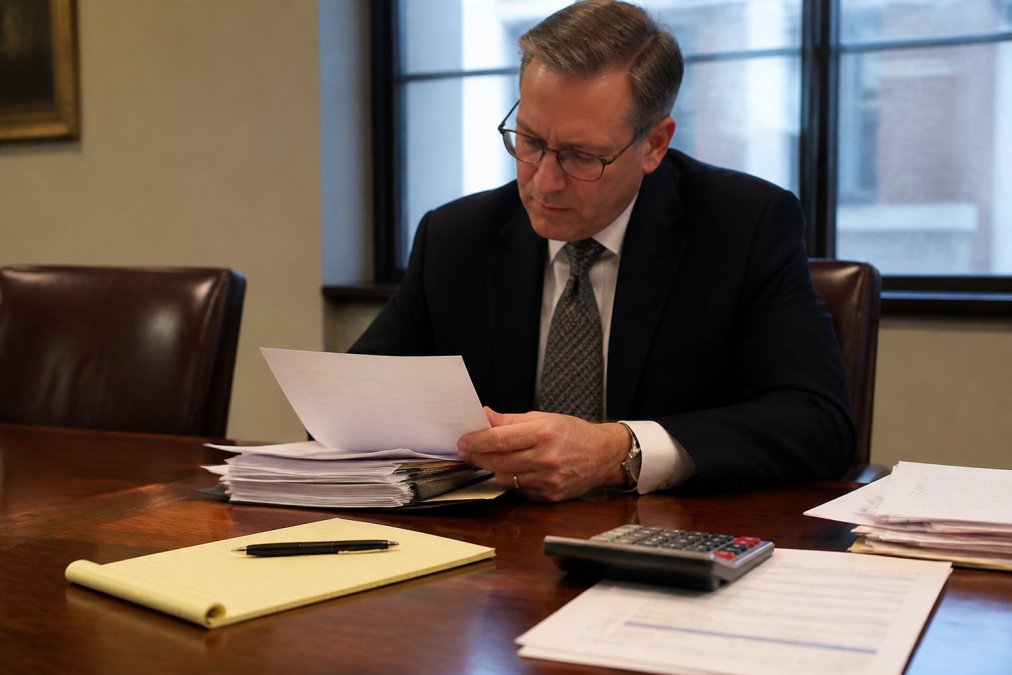
The first thing most attorneys get wrong is treating "expert witness" as a single pricing category. It isn't. A forensic accountant, a medical expert, and an accident reconstruction specialist command very different rates, and their billing increments differ too. The Federal Rules of Evidence, Rule 702 govern when expert testimony is admissible, but they say nothing about what it costs, which is why fee negotiations remain entirely a private contract matter.
| Cost Factor | Typical Impact | Why It Matters |
|---|---|---|
| Specialty expertise | Highest driver | Medical and financial experts charge more than generalists |
| Geographic market | Moderate to high | Urban markets run above rural ones |
| Litigation phase | Variable | Trial testimony costs more than file review |
| Case complexity | Moderate | Multi-party cases require more preparation |
How Expert Witness Deposition Costs Differ From Trial Rates
Expert witness deposition costs are almost always billed at the same hourly rate as trial testimony, but the total bill differs because of volume. A deposition runs several hours of recorded questioning, while trial testimony may be shorter but requires more preparation and standby time. Depositions happen during discovery; trial testimony involves court appearance, waiting to be called, and cross-examination under a judge's schedule.
- Deposition: billed hourly, often with a multi-hour minimum, scheduled in advance
- Trial testimony: billed hourly plus standby, frequently at a higher rate for court time
- Preparation: billed separately in both cases, and often the largest single line item
Factors Influencing Expert Witness Rates by Specialty
Factors influencing expert witness rates start with the expert's field. Medical experts, particularly surgeons, generally charge the most. Engineering and accident reconstruction experts fall in the middle. Financial and economic experts vary widely depending on credentials such as a CPA or CFA.
Beyond specialty, several other variables move the number:
- Years of experience and credentials: board certification, licensure, and academic appointments raise rates
- Prior testimony history: experts who have been deposed and tried many times charge more
- Local market conditions: rates in major metropolitan areas run higher than in smaller markets
- Case stakes: high-exposure cases attract senior experts with higher fees
Expert Witness Billing Best Practices for Attorneys
Review invoices as they arrive rather than at the end of the case. Catching a billing increment error in month one is easy. Reconstructing six months of charges after trial is not.
Fee Structures and Retainer Agreements: Hourly, Flat, and Hybrid
Fee structures fall into three broad categories, and the right choice depends on how predictable the scope of work is.
| Structure | Best For | Client Risk | Predictability |
|---|---|---|---|
| Hourly | Open-ended or evolving cases | Higher | Low |
| Flat fee | Defined scope, written reports | Lower | High |
| Hybrid/retainer | Long cases needing availability | Moderate | Medium |
Retainer Agreement Checklist
Retainer agreement best practices include specifying whether the retainer is refundable, how it is applied to invoices, and what happens if the engagement ends early. Many experts require a replenishing retainer, topped up once the balance falls below a set level. Confirm the agreement addresses each of the following:
- Scope of work. What the expert will and will not do, records reviewed, report produced, deposition and trial testimony, rebuttal, supplemental reports.
- Rate schedule. Hourly rate for each activity (file review, report drafting, deposition, trial, travel, standby), with any premium rates called out separately.
- Billing increment. Whether time is billed in tenths of an hour, quarter-hours, or half-hours, and whether there is a minimum block per task.
- Retainer amount and replenishment. The initial deposit, the threshold that triggers a top-up, and the deadline for replenishing.
- Refundability. Whether unused retainer funds are returned at the close of the engagement, and on what timeline.
- Reimbursables. Which expenses are billable, whether prior approval is required, and whether receipts must accompany the invoice.
- Rate escalator. Whether the rate increases during a multi-year engagement, and by how much.
- Cancellation and settlement. Notice required to cancel, the fee owed on cancellation, and whether the fee is reduced or waived if the case settles before testimony.
- Termination. How either side ends the engagement, and what happens to work in progress.
- Confidentiality and conflicts. The expert's duty to keep case materials confidential and to disclose any conflict that would disqualify them.
When an Invoice Is Disputed
Read the invoice against the engagement letter, not your expectations. If the letter permits portal-to-portal travel and the expert billed portal-to-portal, the charge is contractually valid even if it feels high. Disputes are strongest when the invoice departs from the written terms.
The Hidden Costs: Travel, Standby, and Cancellation Policies
The charges that surprise attorneys most are the ones not discussed at the outset. Travel expenses, standby time, and cancellation policies can add substantially to the total and are frequently the subject of fee disputes. Published rate surveys are least useful here, because they report hourly rates and ignore reimbursables.
What Counts as a Reimbursable Expense
Most engagement letters list reimbursables either as an enumerated schedule (airfare, lodging, meals, parking, mileage, shipping, records fees, courier, deposition transcripts, exhibit preparation) or as a catch-all for "reasonable expenses incurred in connection with the engagement." The catch-all is where disputes live, for example, an expert billing for records the client already paid a vendor to produce, or booking first-class airfare without prior approval.
Tax Treatment and the Independent Contractor Question
Experts are almost always engaged as independent contractors, not employees. Three consequences matter before signing:
- No withholding. The expert handles their own income and self-employment tax. The client does not withhold, and the expert typically receives a Form 1099-NEC for payments of $600 or more in a calendar year.
- Expense reimbursement is generally not taxable income to the expert when paid under an accountable plan, the expense has a business connection, is substantiated with receipts, and any excess advance is returned. Loose "expense allowances" without substantiation can be treated as taxable compensation, a problem for both sides.
- The expert's fee is a litigation cost, not a legal fee. Whether it is recoverable from the opposing party depends on the applicable fee-shifting statute or rule, and it is usually taxed as a cost rather than attorney's fees, a distinction that matters when preparing a bill of costs.
Inflation and Multi-Year Engagements
Expert rates have drifted upward with the broader professional-services market, and a case running two or three years can outlive the rate quoted at engagement. Engagement letters increasingly include an annual escalator, often tied to an index such as the Consumer Price Index, or a stated percentage increase at each anniversary. If your agreement is silent, the expert may simply bill the new rate.
Conclusion
The hardest part of budgeting for expert testimony isn't finding a rate. It's building an agreement that holds up when the case takes an unexpected turn. MCP Investigations & Security has spent over 20 years providing expert witnesses with experience in depositions and trials, along with comprehensive discovery and evidence collection for criminal defense and wrongful death matters. Our team locates and interviews witnesses and handles nationwide record retrieval, so your case is built on accurate information delivered quickly and confidentially.
Frequently Asked Questions
What is a typical expert witness fee?
Typical expert witness fees vary widely by specialty, experience, and case complexity. Most experts charge an hourly rate for file review, preparation, and testimony, with deposition and trial testimony often billed at higher rates. Retainer fees are common upfront. For a precise estimate, consult the specific expert or agency, as rates depend on the demands of your case and the expert's credentials.
Why do expert witness fees vary so significantly by specialty?
Fees vary because of differences in education, training, scarcity, and demand. Medical experts, for example, may command higher rates than general engineering experts due to their specialized knowledge and the time required to stay current in their field. Geographic location also plays a role, with experts in larger metro areas often charging more. The complexity of the case and the expert's courtroom experience further influence the rate.
Do expert witnesses charge differently for depositions versus trial testimony?
Yes, many expert witnesses charge different rates for depositions versus trial testimony. Deposition costs often include a higher hourly rate than file review, and trial testimony may be billed at an even higher rate due to the time commitment and preparation required. Some experts also charge a half-day or full-day minimum for court appearances, so it's important to clarify these terms in the engagement agreement.
How are travel and administrative expenses billed for expert testimony?
Travel and administrative expenses are typically billed separately from hourly rates. Experts may charge for mileage, airfare, lodging, meals, and parking, often at cost or with a standard per diem. Administrative tasks like copying, shipping, and phone calls may also be billed. To avoid surprises, request a detailed expense policy in writing before retaining an expert, and review it with your legal team.