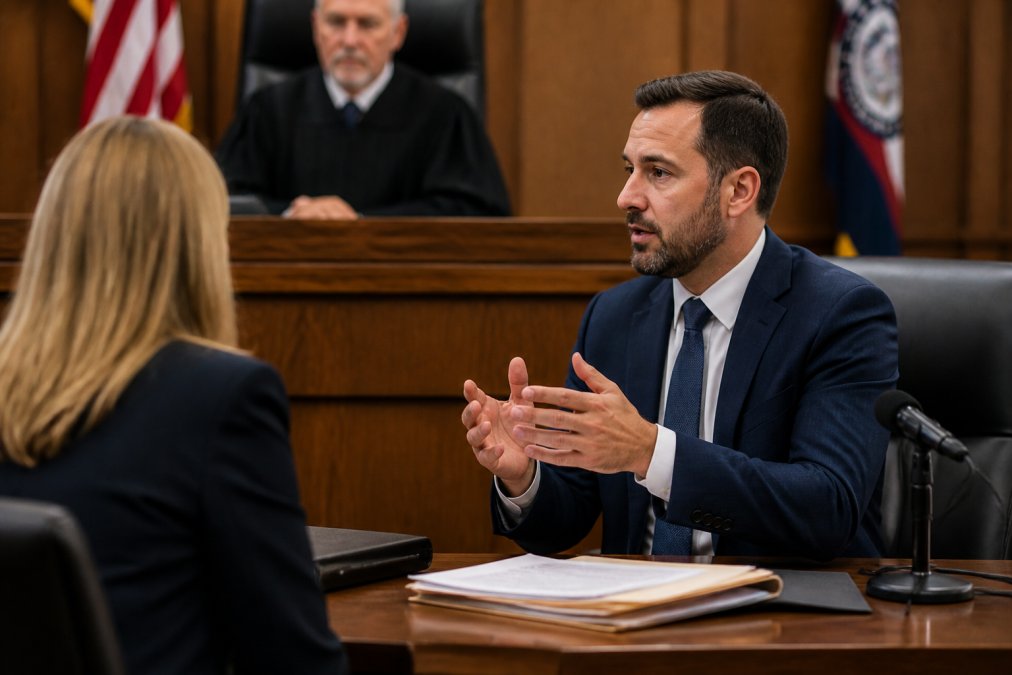
 ultimate-guide
Expert Witness Testimony in Court: A 2026 Guide
Table of Contents
- What Is Expert Witness Testimony?
- Qualifying as an Expert: The Voir Dire Process
- The Daubert Standard for Expert Testimony
- Expert Witness Report Writing Best Practices
- Preparing for Cross-Examination as an Expert Witness
- Using Technology and Demonstrative Evidence
- Remote Testimony and Post-Trial Debriefing
- Conclusion
- Frequently Asked Questions
Last Updated: September 9, 2026
What Is Expert Witness Testimony?
Expert witness testimony in court is the oral or written statement provided by a qualified specialist who assists the jury and judge in understanding evidence that falls outside common knowledge. This testimony relies on specialized knowledge, technical expertise, or scientific evidence to clarify complex issues in litigation.
The core distinction between an expert and a fact witness matters for courtroom procedure. A fact witness reports only what they observed directly. An expert witness offers opinion evidence based on their qualifications and analysis of the case materials. The Federal Judicial Center's reference on expert testimony outlines how this distinction shapes the foundation of expert opinion throughout a trial.
Qualifying as an Expert: The Voir Dire Process
Before an expert can offer opinion evidence, the court must confirm their competency through voir dire. This is the preliminary examination where the judge, and often opposing counsel, questions the witness about their credentials, experience, and the basis for their specialized knowledge.
The voir dire process typically covers education, professional licenses, publications, prior testimony, and specific experience relevant to the case. Your answers establish the foundation for everything that follows. Weak qualification answers give opposing counsel ammunition to challenge your credibility before you address the merits.
Preparation for voir dire requires the same rigor as preparing for cross-examination. Review your curriculum vitae thoroughly. Anticipate challenges to your experience. Remember that the judge holds discretion over whether you qualify, so present your background with precision and without exaggeration.
The Daubert Standard for Expert Testimony
The Daubert standard for expert testimony governs the admissibility of expert evidence in federal courts. Established by the Supreme Court in Daubert v. Merrell Dow Pharmaceuticals, Inc. (1993), this standard requires trial judges to act as gatekeepers, ensuring that expert testimony is both relevant and reliable before it reaches the jury. This gatekeeping role was later affirmed in General Electric Co. v. Joiner (1997), which held that appellate courts review a judge's decision to admit or exclude expert testimony under an abuse-of-discretion standard, and in Kumho Tire Co. v. Carmichael (1999), which extended the Daubert framework to all expert testimony, not just scientific testimony.
Judges evaluate several nonexclusive factors under Daubert: whether the theory or technique has been tested, whether it has been subjected to peer review and publication, the known or potential error rate, the existence of standards controlling the technique's operation, and general acceptance within the relevant scientific community. In practice, judges weigh these factors flexibly. A methodology that lacks peer review is not automatically inadmissible if other indicators of reliability are strong. Conversely, general acceptance alone is insufficient if the expert cannot demonstrate a reliable chain of reasoning from data to conclusion.
The Legal Information Institute's overview of Rule 702 explains how Federal Rule of Evidence 702 codifies these requirements. The rule demands that expert testimony be based on sufficient facts or data, be the product of reliable principles and methods, and that the expert reliably applies those principles to the facts of the case. In 2000, Rule 702 was amended to incorporate the Daubert factors directly into the rule's text, making the reliability inquiry explicit. A further amendment effective December 1, 2023, added a new requirement: the expert's opinion must reflect a reliable application of the principles and methods to the facts of the case, reinforcing that the expert's conclusion must actually follow from the methodology described.
A common point of confusion for experts is the distinction between the Daubert standard and the older Frye standard, which some states still follow. Under Frye, the question is whether the methodology is generally accepted in the relevant scientific community. Under Daubert, general acceptance is only one factor among several. If you are testifying in state court, confirm which standard applies in that jurisdiction before preparing your testimony. The practical implication is significant: under Daubert, you must be prepared to explain not just that your method is accepted, but why it is reliable, how it has been tested, and what its error rate is.
For the expert witness, the Daubert standard shapes how you prepare for trial. Your report and your testimony must demonstrate a transparent, logical methodology. Vague references to "professional experience" or "standard practice" will not survive a Daubert challenge. Instead, document your process: what data you reviewed, what steps you took to verify that data, what alternative explanations you considered and rejected, and why your conclusion follows from the evidence. The judge will read your report before you ever take the stand, and a well-documented methodology is your first line of defense against a motion to exclude.
Expert Witness Report Writing Best Practices
The expert report serves as the backbone of your testimony. A well-constructed report anticipates the questions you will face on the witness stand and documents your methodology so that opposing counsel cannot claim your conclusions lack foundation.
Strong expert witness report writing best practices begin with clarity. Write for the judge and jury, not for fellow specialists. Define technical terms, explain your reasoning step by step, and avoid conclusory statements that do not show your work. The report must demonstrate that your opinion evidence rests on reliable principles, not personal preference.
Structure and Content of the Report
A comprehensive expert report should include your qualifications, the materials you reviewed, the factual assumptions underlying your analysis, your methodology, and your conclusions. Each opinion you plan to offer at trial should appear in the report. Courts routinely exclude opinions that surface for the first time during deposition or direct examination.
Preparing for Cross-Examination as an Expert Witness
Cross-examination is where expert testimony succeeds or fails. Opposing counsel will attack your credibility, your methodology, and your conclusions. Preparing for cross-examination as an expert witness requires you to know your case file cold and to understand the weaknesses in your own analysis before anyone else exploits them.
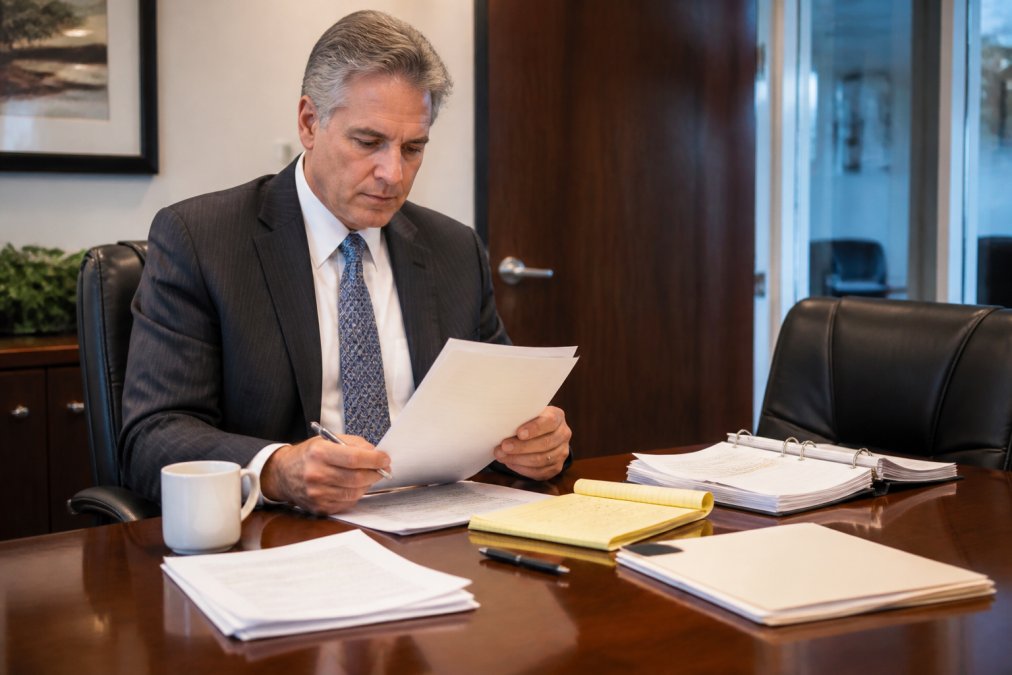
A common mistake is assuming that technical brilliance protects you from effective cross-examination. It does not. Counsel will try to paint you as biased, careless, or overpaid. Practice answering questions directly. Do not volunteer information beyond the question asked. Admit limitations honestly, since defensiveness reads as evasion to a jury.
Common Attack Patterns You Will Face
Opposing counsel typically follows recognizable playbooks. Knowing these patterns in advance lets you prepare responses rather than react emotionally on the stand.
The bias attack. Counsel will highlight your fee structure, your history of testifying for one side of the bar, or your relationship with the retaining attorney. The goal is to frame you as a hired gun. Prepare a calm, factual response. Most practitioners find that acknowledging the fee openly and noting that your opinion would not change regardless of who pays is more effective than becoming defensive.
The 'not in my report' attack. If you plan to offer an opinion at trial that does not appear in your expert report or deposition testimony, opposing counsel will use it to impeach you. The fix is procedural: review your report before trial and ensure every opinion you intend to offer is documented. If you developed a new insight after your deposition, disclose it to the retaining attorney well before trial so opposing counsel cannot claim surprise.
The hypothetical question attack. Counsel will pose a hypothetical that changes one fact from the case and ask whether your conclusion would change. The trap is that you may feel pressured to defend your original conclusion regardless of the altered facts. The correct response is to evaluate the hypothetical honestly. If changing the fact would change your conclusion, say so. If the hypothetical is so unrealistic that it has no bearing on the case, say that directly and explain why.
The 'learned treatise' attack. Counsel may read from a textbook or article and ask whether you consider it authoritative. If you agree it is authoritative, counsel can then use it to impeach you if your testimony conflicts with it. If you disagree, counsel may paint you as out of touch. The preparation strategy is to know which treatises are considered authoritative in your field and to review the passages most likely to be used against you before trial.
Psychological Readiness for the Witness Stand
The psychological demands of the witness stand differ from any other professional setting. You are not in a boardroom debate. You are confined to answering questions under rules designed by lawyers, and your composure is part of the evidence the jury evaluates.
Many experts prepare their substance thoroughly but neglect their mental preparation. The witness stand triggers a fight-or-flight response even in seasoned professionals. Heart rate elevates, working memory narrows, and the tendency to rush answers increases. Rehearse under pressure. Have a colleague grill you with hostile questions. Learn to pause before answering, to breathe, and to maintain a steady tone even when counsel becomes aggressive. The jury watches how you handle provocation, and a calm expert who concedes genuine limitations appears far more credible than one who fights every point.
A practical drill used by trial consultants is the 'hostile mock cross.' Have a colleague who is not an expert in your field question you for 90 minutes using the attack patterns above. Record the session and review it. Most experts are surprised by how often they use filler words, how quickly they answer before fully processing the question, and how their body language shifts when challenged. The goal is not to script answers but to build the cognitive stamina to stay present and composed under sustained pressure.
Another technique is 'question narrowing.' Before trial, write down the three questions you most fear being asked. For each, prepare a direct, honest answer that does not spiral into defensiveness. Practicing the answers to your worst-case questions reduces the anticipatory anxiety that often undermines performance more than the actual cross-examination does.
On the stand itself, use the pause. A two-second pause before answering accomplishes three things: it gives you time to process the question, it signals to the jury that you are thinking rather than reciting, and it interrupts counsel's rhythm. If a question is compound or ambiguous, ask for clarification. If counsel misstates your prior testimony, correct the misstatement immediately and politely. The jury is evaluating your credibility, and the expert who remains composed while being attacked consistently outscores the expert who matches counsel's aggression.
Using Technology and Demonstrative Evidence
Modern litigation increasingly relies on technology and demonstrative evidence to communicate complex information. Animations, timelines, interactive maps, and digital reconstructions can make your testimony more accessible, but they also introduce new risks.
Every demonstrative exhibit must be accurate, transparent about its underlying data, and properly introduced through you. If opposing counsel can show that an animation omits key facts or that a timeline mischaracterizes documents, your entire testimony suffers. Verify every visual element against the record before trial, and be prepared to explain the technology to the jury in plain language.
Remote Testimony and Post-Trial Debriefing
Remote testimony has become a permanent feature of courtroom procedure. Whether testifying by video for a deposition or a trial, treat the remote setting with the same formality as the physical courtroom. Position your camera at eye level, ensure professional lighting and a neutral background, and look at the lens when answering.
The National Center for State Courts on technology in the courts provides guidance on how virtual proceedings continue to evolve across jurisdictions.
After the trial concludes, conduct a post-testimony debriefing. Review what worked and what did not. Note the questions that caught you off guard. Assess whether your demonstrative evidence landed effectively. This reflection sharpens your performance for the next engagement and builds institutional knowledge that benefits every future case.
Conclusion
The burden of proof in litigation rests on the parties, but the burden of clarity rests on the expert witness. Whether you are delivering expert witness testimony in a deposition or before a jury, your value depends on your ability to translate specialized knowledge into credible, understandable opinion evidence. The Daubert standard for expert testimony demands reliability, and preparing for cross-examination as an expert witness demands resilience.
For over 20 years, MCP Investigations & Security has supported legal teams through comprehensive discovery, witness interviews, and expert witness testimony in depositions and trials. Get started with MCP Investigations & Security and bring testimony preparation grounded in real investigative practice to your next case.
Frequently Asked Questions
What is the difference between a fact witness and an expert witness?
A fact witness testifies only about what they personally observed, heard, or did. An expert witness offers opinion evidence based on specialized knowledge, training, or experience. Fact witnesses cannot give opinions. Expert witnesses are permitted to draw conclusions from evidence, but those conclusions must be grounded in reliable methodology under rules like Federal Rule of Evidence 702 and the Daubert standard.
How does the Daubert standard affect expert witness testimony?
The Daubert standard is the gatekeeping rule federal courts use to decide if expert testimony is admissible. The judge assesses whether the expert's methodology is reliable and relevant. Key factors include whether the theory or technique can be tested, whether it has been peer reviewed, and its known error rate. This standard determines whether your expert witness testimony reaches the jury.
Can an expert witness be disqualified from testifying?
Yes. An expert can be disqualified during voir dire if the court finds they lack sufficient qualifications, or if their methodology fails the Daubert standard. Disqualification also happens when an expert demonstrates bias, fails to follow professional ethics, or bases opinions on unreliable data. Proper preparation and a thorough expert report reduce disqualification risk.
What are the best practices for expert witness report writing?
A strong expert report states your qualifications, the materials you reviewed, and your opinions with clear reasoning. Disclose all data you relied on, including information that may not support your conclusions. Use plain language where possible and define technical terms. Avoid overstating certainty in your findings. A well-structured report survives Daubert challenges and strengthens your testimony during direct examination.
How should an expert witness prepare for cross-examination?
Review your expert report and deposition transcripts thoroughly. Identify weak points in your analysis and prepare responses that acknowledge limitations without undermining your core opinions. Practice answering questions concisely. On the stand, listen carefully to the full question, answer only what is asked, and avoid volunteering extra information. Maintain composure and impartiality, even under aggressive questioning.